
Interview by Grace Franklin
Cover Photo Courtesy of GoodTalk
Grey Oakes is a North Carolina based songwriter and producer whose music has become our newest obsession. With influences ranging from James Taylor to D’Angelo, Grey’s music is the perfect blend of singer-songwriter and alternative R&B. It's this refusal to fit neatly into one genre that makes his sound so exciting, as he continues to push the boundaries of what his music can be.
Grey’s music was put on the map after the release of his popular single, “Carolina Blue” came out last year. Fans connected with not only his textured guitar sounds, but also with the imagery of his hometown in North Carolina.
Now after building up his audience, Grey Oakes is getting ready to release his debut, self-produced album, Whatcha doin for the rest of your life? on January 15th. I had the opportunity to sit down with Grey last week to talk about his newest release, “Summer Winds Back, Again,” as well as everything leading up to his debut.
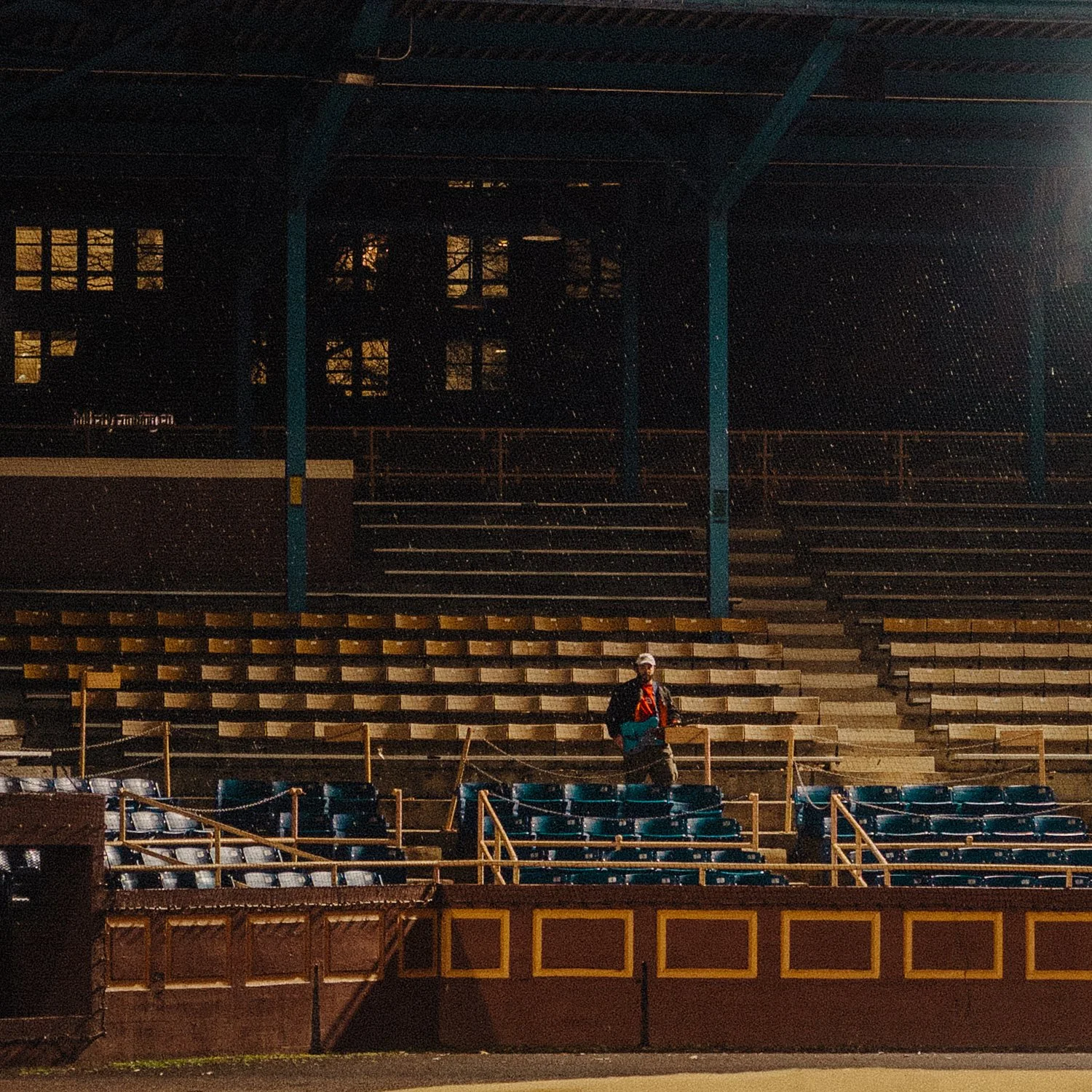
This interview has been edited for length and clarity
Grace: I'd love to start by talking about North Carolina. You grew up outside of Greensboro on your family's farm, and it seems like your upbringing and the state itself have become such an integral part of your musical identity. How would you say growing up in North Carolina has shaped you as an artist?
Grey Oakes: I think growing up in North Carolina made me a better musician. I started out playing jazz guitar, so I spent a lot of time gigging and being around older musicians in the scene who had been doing it forever. I always felt like, if I wanted to make it in North Carolina, I had to just be really nasty at what I did.
North Carolina is also just a unique place. There are a lot of different types of people and influences, and I think most of what I am comes from where I grew up. It's a special place to me, and I've always wanted to make it in a way where I don't feel like I have to move.
Grace: I feel like the Carolinas in general have so much talent. I would love to see the region become more of a music hub. The scene is definitely growing, too. Some of my favorite live shows have honestly been from local artists I've stumbled upon at a random bar in Waxhaw, North Carolina.
Having spent time playing around the state and becoming part of that community, how would you describe the North Carolina music scene right now?
Grey Oakes: I think there are different pockets of musical identity throughout the state. Asheville and the mountains have their own indie, alt-country scene, with artists like Wednesday and MJ Lenderman. Then there's a really cool hip-hop scene around Fayetteville and Raleigh, with the Dreamville and J. Cole influence. Charlotte has its own thing, too, with a lot of cool punk rock, rock, and R&B.
The pocket I'm in is kind of wherever I can fit. My music has elements of a lot of those different sounds, so I tend to bounce around between scenes. But I think people down here are also very chill. It's not as competitive, which I appreciate. When you gig in bigger cities, there's more of a tendency toward gatekeeping venues and things like that. It's easier to avoid that kind of environment down here.
Grace: It's definitely more supportive, for sure. And I think it's interesting that you mentioned being able to fit into so many different pockets of the North Carolina music scene. I was reading about some of your early influences, and I think there's a really interesting intersection there. You pull from artists like James Taylor and John Mayer, but also D'Angelo, Maxwell, and Stevie Wonder. Those are all very different musical worlds, but I think you can hear pieces of each in your music.
When did you first start exploring those different sounds, and how did they eventually come together to shape your own musical identity?
Grey Oakes: My mom was a big influence on the different things I listened to growing up. She listened to pretty much everything. The first CD I ever had was James Taylor's Greatest Hits, and he was definitely one of the first artists who opened that door for me. Stevie Wonder was also always playing around the house.
Once I started playing guitar in middle school, I gravitated more toward blues and R&B. My mom and I would go see a lot of blues shows, like Buddy Guy, and I was really obsessed with guitar players like Jimi Hendrix and John Mayer. Through John Mayer, I started discovering more of the R&B influences behind his music, which eventually led me down a rabbit hole of artists like D'Angelo.
I think I've always been drawn to that style of music, the chord structures and the emotion behind it. For a while, I was trying to make more of a blue-eyed soul sound, but I realized my voice didn't necessarily fit that style. I have more of a pop vocal tone, so I had to figure out how to bring all those influences together in a different way. I think this record does that in a cool way. It feels more authentic to all of those influences put together.
Grace: Are you a big Dijon fan?
Grey Oakes: Oh yeah, I love Dijon
Grace: Listening to your music for the first time reminded me of the first time I ever heard Dijon.
Grey Oakes: That's a huge compliment because he's one of my favorites. I think Dijon is a great example of that same pipeline. When Frank Ocean dropped Channel Orange and Blonde, and SZA dropped Ctrl, alternative R&B took on this whole new life. I think Dijon is carrying on part of that legacy. Frank hasn't released music in so long, and it feels like Dijon has filled that gap for a lot of people.
Grace: You started out playing guitar and studying jazz before eventually getting into producing your own music, which is quite a journey musically. How have those different experiences shaped the way you approach making music today?
Grey Oakes: I think you kind of have to be a jack of all trades. I spent a long time hyperfixating on Jazz and guitar and trying to be the best player I could be. But when I started getting into production around 19, I realized I didn't have the bandwidth to keep pursuing all of those things at once.
At the end of the day, I love songwriting and making music, so I wanted to focus on finding my own sound. Production became another way for me to express myself, almost like learning a new instrument. Over the last couple of years, I've really figured out my workflow and how I like to make music.
Grace: I want to talk about "Carolina Blue," which really introduced your music to a much wider audience last year. Looking back, what did that song mean for you and your career? Did you have any sense when you were making it that it would connect with people the way it did?
Grey Oakes: I made ‘Carolina Blue’ while I was living with my parents for a few months before getting married. I had this tiny makeshift studio in the attic, and I was just making music all day, every day. I felt like my abilities had finally caught up with my ambition, and I knew it was time to really go for it.
When I finished the song, it felt like the first thing I'd made from start to finish that was completely me. It was the first song that really reached people outside of my own circle, and it changed my life in that way. The industry started paying attention again, partly because of the interest in that guitar-driven sound, and I saw an opportunity to bring together the skills I'd spent years developing to make something that felt honest to me.
I also had a really specific visual direction in mind. The gas station in the music video is in Liberty, North Carolina, and I wanted the visuals to feel distinctly Southern without making a country record. The song has R&B drums and a New Jack Swing influence, but the imagery looks like something you'd only see in the South. That juxtaposition felt really representative of how I experience the South.”
Grace: You recently released a full-band live reworking of "Carolina Blue," filmed at Michael Jordan's gymnasium, which is such a cool setting! What inspired the idea behind that performance, and what was it like reimagining the song in a live setting with a full band?
Grey Oakes: Since ‘Carolina Blue’ had already had its moment, bringing it back in a live setting felt like a really fun exercise and a way to showcase the musicality behind the song.
One of my biggest strengths as an artist is my background as a gigging musician. I spent so much of my life playing three-hour cover sets, so I think these performances highlight something that sets us apart: we can really play live and, in some ways, make the songs sound even better.
It's also been exciting to finally have a consistent band. My keyboard player, Will, my drummer, Jay Scotty, and I have been playing together for about a year, so it was a cool opportunity to showcase how much we've grown together.
Grace: I don’t typically listen to live recordings, but I keep going back to that one. It sounds so good.
Grey Oakes: That’s a shoutout to my guy Adam Hong out of New York, too. He's such an incredible producer and engineer.
Grace: Your new single, "Summer Winds Back, Again," comes out today alongside its accompanying music video. I love the nostalgic atmosphere of the video, especially the grainy footage and the way it captures these very specific North Carolina settings. What was the creative vision behind the song and video, and how did you want those two pieces to complement one another?
Grey Oakes: I was going for a Y2K, Third Eye Blind kind of sound mixed with modern alt-R&B. The guitar tones and some of the production choices have that nostalgic feel, which carries through to the video.
I wanted the visuals to capture that same sense of nostalgia, so we filmed at places that feel a little frozen in time. The mall we filmed at, Crabtree in Raleigh, is one of the last big walk-around malls in the area. It's been updated, but it still has that older feel. We paired that with footage from a Sony Hi8 camcorder to give everything this almost timeless quality.
The song is nostalgic lyrically and sonically. At the end, there's even a voice memo of cicadas that I recorded outside my parents' house one summer night. Those little details bring back a certain feeling of summer and growing up in the South. I wanted all of those elements to feel nostalgic without the song itself feeling stuck in the past. It still feels really current.
Grace: You're getting ready to release your self-produced debut album, Whatcha doin for the rest of your life?, in early 2027. First of all, I love the title! What inspired it, and how does it connect to the larger themes or story you're telling throughout the record?
Grey Oakes: The title goes back to that feeling I had while making ‘Carolina Blue.’ I'd spent so much of my life working to become really good at music, and I felt like I was at a point where it had to happen or not. The album title captures that existential question.
It's not necessarily the direct narrative of the album, but it's the overarching idea. There are a few storylines throughout the record, and a lot of the songs have lyrical callbacks to earlier tracks that connect them to a bigger narrative.
I was also at a crossroads in my personal life. I was about to get married, and it felt like all these different parts of my life were coming together. As I worked on the album, I started weaving in the things I love and cherish, particularly my relationship and music. The title track reflects that, with the first verse about getting married and the second about music and the creative process.
Grace: The album is described as bringing together Southern rock-inspired instrumentals,, alternative production, and R&B harmonies, really leaning into all the different sides of your musical identity. How does this album represent where you are creatively right now, and is there anything about it that might surprise long-time listeners?
Grey Oakes: I think the album is bookmarked by its most R&B-leaning songs, “Heaven Knows” and “Whatcha Doin for the Rest of Your Life?” They're almost sister songs, and I wanted them to frame the different influences you hear throughout the 12 tracks.
There are also some quieter singer-songwriter moments that people might not expect. I love artists like Ryan Beatty and Lizzy McAlpine, and there's a track called “Hall River” that's my foray into that world.
I think there's more Southern rock on the album than people might expect, too. “Summer Winds Back, Again” is a good example of that. There's a lot of variety in the guitar tones throughout the record, rather than relying on the same sound for every song. I wanted that variety to reflect how I actually listen to music and how we play together live.
Grace: As we look ahead to 2027, what are you most excited about? Beyond the album, what else can fans expect from Grey Oakes in this next chapter?
Grey Oakes: I’m just really excited for people to hear the record. We’ve been working on it for about two years, and I think it’s going to surprise people based on what they’ve heard from me so far. I’ve been living with this album for a long time, so I’m excited to finally put it out, play it live, and hear which songs resonate with people.
I’ve also been holding back on starting the next thing creatively so I can stay present with this record. Once it’s out, I’m excited to see where that takes me. Hopefully, 2027 means a lot of live shows, touring, and getting to meet and play for people.
