
Hannah Cole Lets Her Younger Self Lead on Switchbacks
Interview by Natalie Ingalls
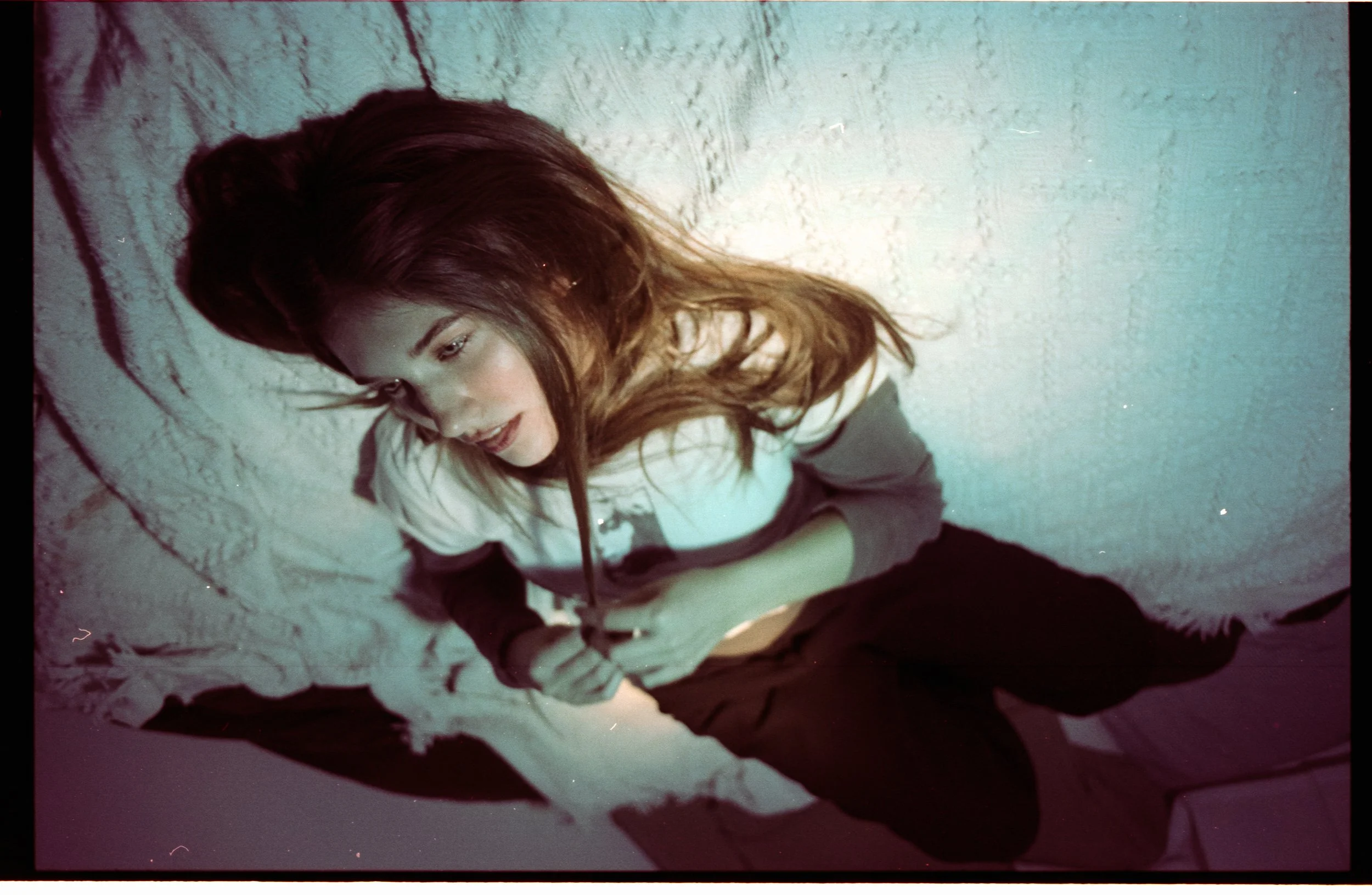
“I never know what’s coming around the corner” sings Hannah Cole on the title track of Switchbacks, the debut album from the 26-year-old Nashville-based artist. It’s a fitting line for a record that questions what it means to choose music as a career and of looking to one’s past to help puzzle out an uncertain future. Cole’s soft voice anchors the album with its strong melodies, backed by dirty alt-rock and fuzzed-out shoegaze guitars.
Young as she may be, Cole is well acquainted with the industry, having studied songwriting at Belmont University and then staying in Nashville to pursue a music career. In Nashville, she found a collaborator and partner in Josef Kuhn, aka Nickname Jos, a multi-hyphenate who has toured, produced, and written with many buzzy indie musicians, including James Eichman, both of whom played on the record and joined Cole on tour.
Our conversation took place September 25th before Cole’s show at Subterranean in Chicago.
Hannah: Everybody has their own artist projects too, but we all kind of help each other with things. Jos was the main collaborator with me on the record.
Natalie: I had read a little bit about your past producer relationship and your IRL partnership. But what makes you want to keep working with Jos?
H: From the beginning, he's always really understood my creative vision. Also, he’s just a really selfless producer. I think a lot of producers come in, and they want to run the whole show and tell you how the music should sound, and I think the reason that he's able to work with so many different artists in so many different genres is because he really listens to the artist's vision and perspective and wants the music to sound like them as much as the artist wants the music to sound like themselves.
We had such a good foundation of respect and friendship and artistic and creative chemistry. And so, having that, and then our relationship developing over time and now dating for 3.5 years, I can never imagine him not working on something with me. I think we kind of speak our own creative language sometimes.
N: Being in Nashville, you have a wealth of artists and people to work with. Do you ever feel a pressure to expand your creative circle?
H: I've done professional co-writing sessions. Going to music school and studying songwriting, they encourage you to get in on those writing sessions with publishing companies, and I actually haven't used a single song from one of those. I think it's so repetitive and formulaic in that environment. If you're really wanting to form your personal artistic identity, it’s a hindrance.
I've only really collaborated with people that I feel really know me well. Like Annie DiRusso and I, we've written a song together after doing a long tour together, and that was really special, because she knew what I was feeling and going through at the time. I think when you're making music with people that don't know you very well, it's hard to get them to understand your creative vision.
But I'm really down to, as I think about more music on the next record. Budget is a factor in that too. Having the financial resources to even go outside of your home studio and your bubble and work with people you've dreamt of working with. So hopefully for the next record, of course I'll always have Jos there helping me and working on things with me, but we definitely want to expand and maybe work with another producer in the future. We had Sonny DiPerri mix Switchbacks, and we've talked about wanting to work with him for the next record. He's incredible. So hopefully we'll see.
N: In the record, you touch on the tension between chasing your dreams, but also the B.S. in the music industry. And I feel like Nashville as a place itself, the tension also exists there. Like you have all these like big wigs that are in the town but then people also going about their day-to-day lives. And I wonder, what does physically being in Nashville do for you as a songwriter? Do you feel comfortable all the time being in this music hotbed?
H: I really don't. Sometimes I feel really lucky because they always say go where the business is. And I think that is true in a sense. Now with social media, it's a little bit easier to create a music group for yourself outside of the three main cities—LA, New York, Nashville. But with everybody around me doing music, that's something I'm not used to.
But I think it's good and it's really encouraging, to be honest. It's pushed me in a positive way to really find my own voice, because I kind of have no choice. And I've gone through the trendy things, or trying to emulate the sounds of the people around me or music that’s coming out right now. And I think that in that way, Nashville's really been helpful. Just meeting really talented, amazing people.
There are pros and cons to having everyone around you pursuing the same thing. It generates a little bit of competition, and it can create some tension and awkwardness in some situations, but I try to keep my circle fairly small, and I think I have a good read on people. I can tell pretty immediately if someone's trying to bullshit me a little bit or is giving a weird competitive energy. It’s just so funny to me because I'm like, we’re all trying to do the same thing here. But I understand. There's healthy competition, but there's also a way to get sucked into it, and it becomes unhealthy.
N: Is there a peer or even just someone you admire that is tackling their career in a way that you want to emulate?
H: That's a good question. I mean, we talked about Annie earlier. I think she's done an amazing job. She is also someone who has a really good natural read on people and has surrounded herself with really awesome, creative, secure people. I think Annie approaches her career with a lot of confidence.
I just look up to people who are completely themselves. I mean, on a huge scale, I feel like Charli XCX is a great example, someone who's always stuck to her roots and creative vision and hasn't let the outside noise dictate what she wants to do creatively. That's a great place to be as an artist.
N: I’m curious about Switchbacks. Going into writing it, did you know the story that you were wanting to tell, or did you figure out through the writing of the songs what the thesis of the album is?
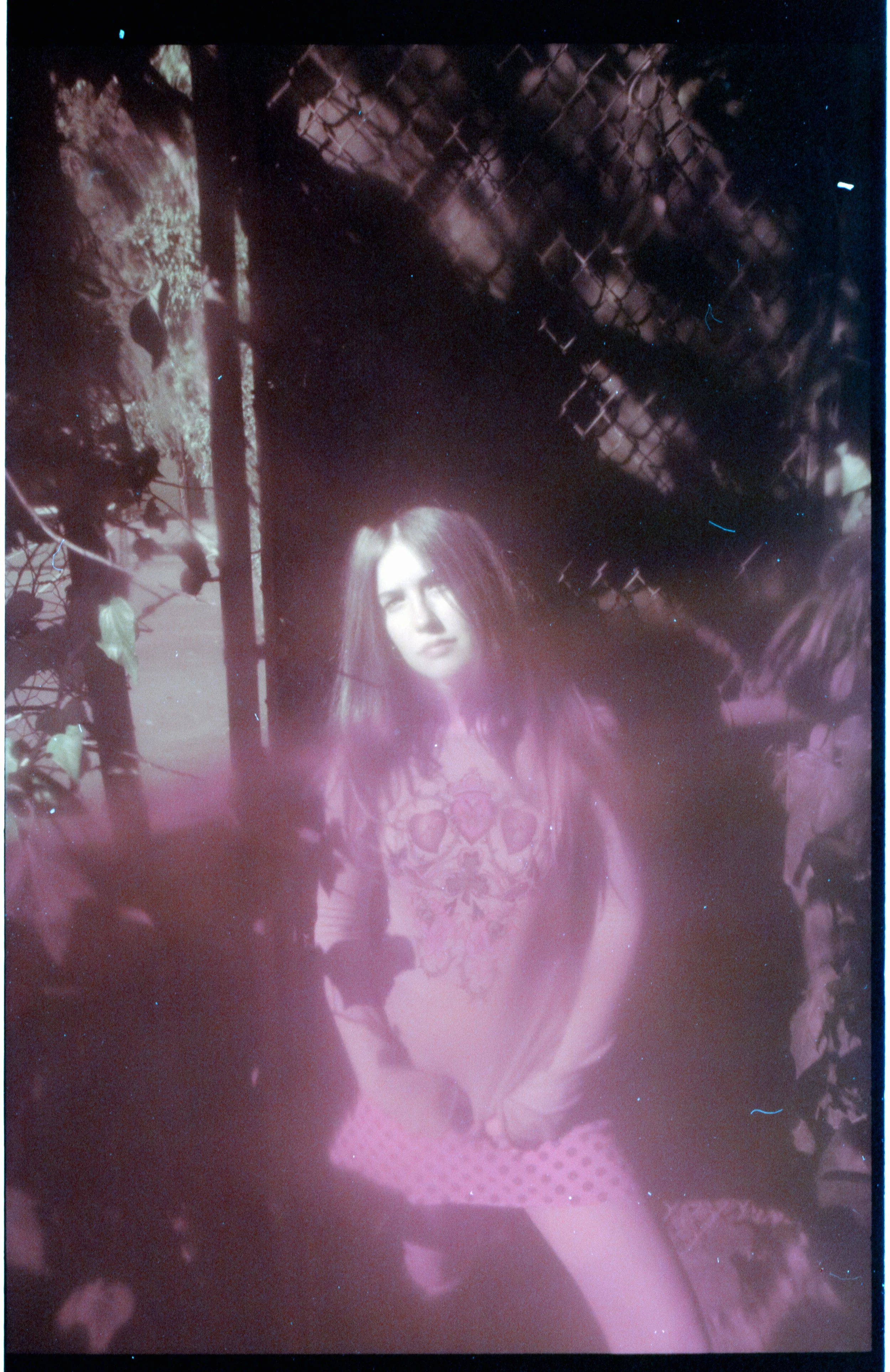
H: I think I realized as I was creating the songs, but I think you can even hear that through the music. In “Pitcher,” for example, that song is about my decision paralysis. Before writing that, I'd written a few songs for the record, and I was feeling a little bit lost and stuck, and I was like, I'm standing before this huge project; how am I going to tackle this? And I was like, well, what if I just write about this experience? Because it's not just a musician thing; it’s a person thing. With “MMA,” that had such a strong message, and the core of that song felt really inspiring to me, so I used that as kind of a launching pad for the themes across the record.
“Switchbacks” was the first one I wrote for the album, and I didn't know it was the title track. I was like, I don't necessarily want to make this whole record about being a musician; I just want to be able to relate to the experience of pursuing success and specifically success in a career with something that you've been passionate about since you were a kid and how weird that can be. Having to turn your passion into something that's going to make you money and where that can go wrong.
With “Switchbacks,” the image of it- these long, winding roads that are taking you up this huge mountain- I wanted to show with the record that success or growth is not this linear thing. It's very back and forth and up and down. Even though something looks like you're going backwards, it's actually propelling you forward. Not only that, but you have to be on the outside of something, seeing things from a bird's eye view, to be in it and to exist in it. You have to have awareness to exist in a space healthily.
Another thing across the record is this dancing motif, this entertainer motif, and I wanted people that aren't even performers or musicians to hear that and think, what is the performer within me? What is the entertainer within me? And in what ways am I performing in my daily life, and dancing around things, or putting on a show for people and maybe not being true to myself?
N: I feel like you began to explore this idea in a more interpersonal context on the Cradle EP. In “Guard Dog,” you sing, “I want to be a legend when I turn 21,” and also sing about how your music isn't being taken seriously. How do you think of the evolution in your writing over your projects?
H: What's interesting about Cradle is that at that time, I remember having this perspective, that oh, I know so much more now than I did when I was younger, and I wish I could go back and heal this younger self and all that insecurity. I had a much more black-and-white perspective. Someone hurts your feelings; they're evil. You have a crush on someone; they're perfect.
I actually didn't realize until making this record how important it was for me to look back and see how confident I was when I was a kid—looking at videos of myself singing and playing the piano, probably not super well but with a lot of confidence and a lot of joy. Going back into memories where music was just fun, a hobby and not a career.
I wasn't quite aware of it until maybe writing “Mosquito Hawk,” which is about more so a memory of me going to Asheville with Jos and working on music for fun, but I think this idea of going back into a memory was really important for me on this record.
N: On “Mosquito Hawk,” I was curious about the line about “your record's not as clean as mine.”
H: It was kind of a play on words because it was about someone's past or past mistakes. But also, about the romance that's at the center of a relationship and music. So I guess that's why I wanted to use that word, and also in “Every New Day,” I say “the record keeps on spinning,” and that is signifying life—the world keeps turning. And I think an artist measures their time in records, and I wanted to have that kind of play on words. But it mostly represents someone's past or their mistakes. Maybe you've messed up more in a relationship, or I've made you feel like you messed up more. Maybe that's not even true, but that was my perspective.
N: I wanted to ask about the song “100 Bucks” because I couldn't decide how positive it was. “You love me calm, you love me tough, you make me feel like 100 bucks.” Isn’t it normally a million bucks?
H: When I was writing that, I was like, I can't say a million bucks because it's going to be this cliché. I was talking about it with Jos; there's something about 100 bucks. I don't know if it's more natural or intimate or just rolls off the tongue nicely, but it's not too much. It's just enough for the most mundane, daily things in your life. Like maybe getting some groceries, getting gas. This might be kind of abstract, but 100 bucks just feels intimate to me. You see me as enough, but not too much.
That one is positive. That one's more directed at people who love me and see me as enough, or see me for who I am. When I say, “He’ll never see what you see in me” and [reference] the beach and skiing, it’s a caricature of a man in the industry. You see people going on these trips and using their artists' money for things. You'll see it on Instagram and be like, oh, okay, that's what you're doing with the money this artist made you, but I'm still out here struggling a little.
But I think the people that see you and respect you and really know you—you make me feel good, you make me feel like 100 bucks, you make me feel like I'm enough.
N: That makes sense. I’ve never seen a million dollars. So how do I make you feel like that?
H: Yeah, exactly.
N: In terms of influences, who did you look to for this record?
H: I was definitely looking back at records I thought were perfect records. I'm a huge Alex G fan, so House of Sugar and God Save The Animals were big inspirations. Even looking further back, there's this artist named Juliana Hatfield whose music I love; especially on “MMA” you can hear the influence there. She has an album called Only Everything that's so perfect. The Breeders' Last Splash was an album I listened to. Reading, Writing and Arithmetic by the Sundays. Cocteau Twins, Heaven or Las Vegas. I was trying to pull from older stuff and combine that with some more modern stuff.
N: I have to ask, because you mentioned her on the Cradle EP, do you like the new Phoebe Bridgers record?
H: Yes, I really do. It's funny because I was talking to someone about how I mentioned listening to Bridgers all night in “Guard Dog.” I think I was trying to put a stamp on the times because it really was a thing. She exploded at that time. It was COVID, and everyone was hunkered down, listening to Phoebe Bridgers.
I haven't listened a bunch to her new record, but I have listened to it all the way through, and I think it's brilliant. She’s such an amazing songwriter and producer, and I'm just so impressed with someone that has blown up so much. I think a lot of people try to emulate that sound, and I think that she’s stayed so true to herself. It’s a really great record. I love “Governor's Waltz.”
N: Do you have any songs on the album that surprised you, that turned out different than you thought they would?
H: I think “Shooting Star.” We originally had a tape recording of that song that was me and a guitar, very quiet and slow and sad. Then I was like, this doesn't really sonically make sense with the rest of the songs. And I also knew I wanted “100 Bucks” to go directly into something. And I was like, what if we reinvent this song, production-wise, and we brought James [Eichman] in, and he put down this really cool riff on the song. We kind of wanted to make it a more DIIV-esque song. That one was kind of interesting to figure out. “Mechanical Bull,” I wrote that on my acoustic guitar, and I didn't think it was going to sound as weird and crazy as it sounds.
N: Final question, since we're here ahead of your third show on the tour, how are you feeling about playing these songs live?
H: It's more fun than I've ever had. And I hope people feel that and respond to that too—I want to encourage people to move around a little bit more. With these songs, they're a bit more danceable. I think they pack a punch in a way that maybe some songs haven’t in the past. I hope people come to the show and are like, whoa, that sounded even crazier than the record.
