
Squish: How Gretel Soundtracked the Cycle of Angst and Clarity
Interview by Amanda La
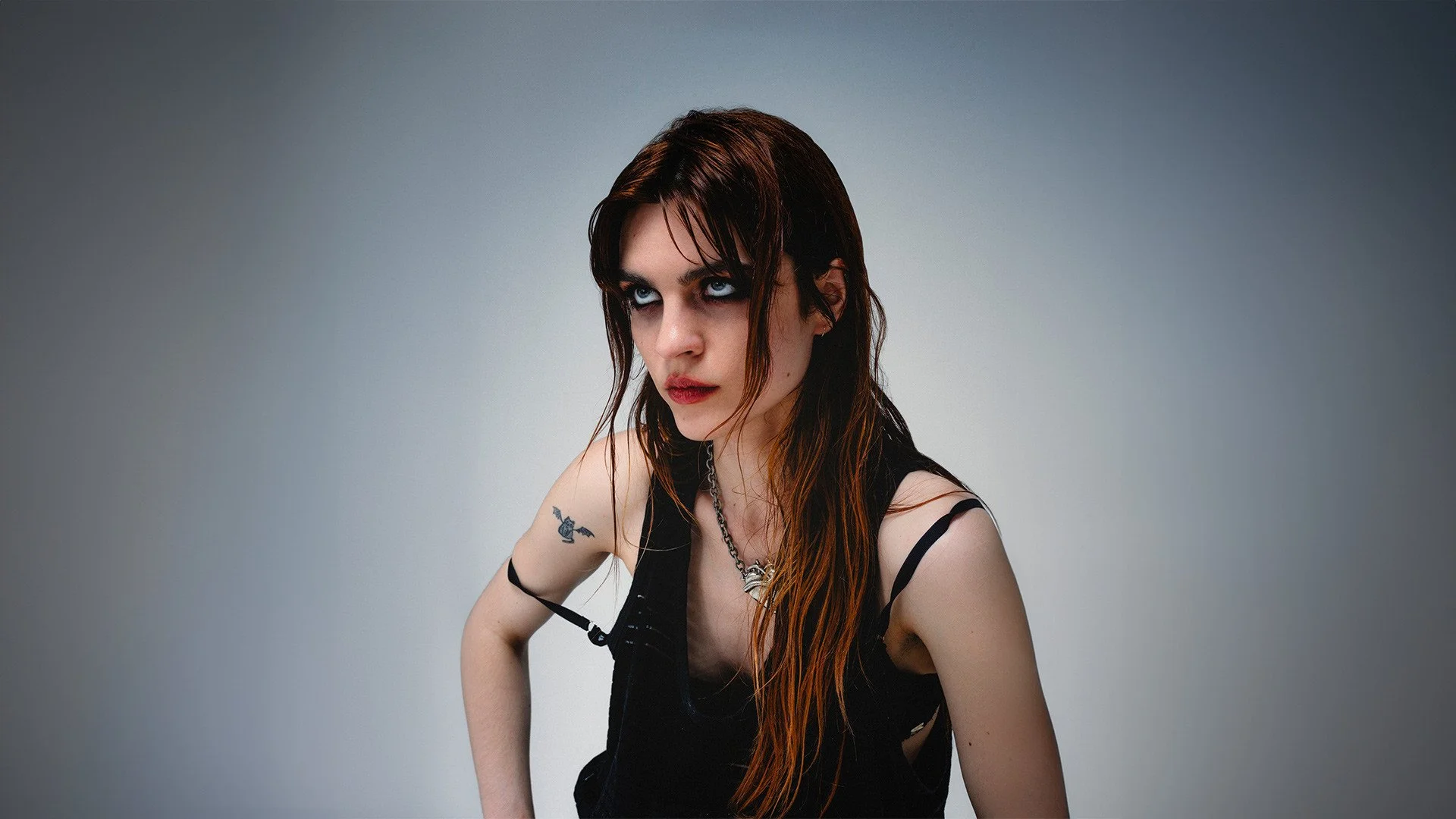
Photo By Jacob Ray
While she introduces herself to me as Maddy, she’s probably better known by her stage name, Gretel. Her phone is carefully propped up against a pub menu as we speak over Zoom about Squish, her debut album.
Sound Stage: How does it finally feel to release your debut album? Is it a different kind of emotional experience from releasing EPs and singles?
Gretel: With EPs and singles, you get this immediate gratification from it. You just make something you like and put it out. Whereas the debut album, a friend of mine once said to me that “a debut album is like the window into an artist's soul, and it's their official, truest original statement.” That got in my head a little bit, so it meant that Squish was much more curated than anything else I'd ever done before. I wrote over 50 or 60 demos for this album. So everything was all very intentionally selected.
Sound Stage: Thematically, there's so much going on in the album, but there's also a perfect balance of reality and hopefulness. With the experiences of girlhood, there's so much built-up emotion involved. How did you condense those feelings into an album where there’s such limited space?
Gretel: Oh my god, it was so difficult. I had so many songs, and all of them felt true to me, but I eventually managed to narrow it down to 25 where I was like, “Okay, these songs really represent who I am.” I didn’t go into it thinking I was going to write about coming of age, but for better or worse, I’m a young woman coming of age, and it’s such a complex experience that I kind of had to write about it.
I write about things that I don’t yet have the competence to understand fully. The second I understand it, if I try to write a song, it will sound too mathematical and formulated. But if I don't understand something, then I have to write about it.
Sound Stage: Were there any tracks or ideas you left off the album that still feel important to the project?
Gretel: There's a song called Dummy Girl, which was arguably the best song on the album, and it got left off because it was so emotional. It had a much more defeated tone to it. I always feel like I want to come out on top, and I want the people that I love to come out on top. It’s a beautiful song, but it's not me. Maybe there'll be another time where it'll come out.
There's also a bunch of songs that we were touring during our US tour in 2023 that fans still message me about, like Cutting Edge. It will come out, I swear! I still love it, it just didn't flow with the album.
Sound Stage: As I was listening to the album, I realized there's a raw, almost gritty throughline across the songs, both musically and lyrically. How did the tone and the texture really affect you when it came to curating the album with the instrumental and production sides?
Gretel: I was fighting for my life. You can either produce in the box and have the power to manipulate the music forever, or you could go live with a band into the studio, where you can only afford a certain amount of time. That limitation meant there was this kind of frenzy in recording the album, which was what it had been lacking the first time around.
So we went in, did some live takes, and called it a day. I still agonized about all the vocal takes, so that was me holding onto some level of perfectionism.
It felt like a rite of passage actually, because so much stuff these days is in the box. If you challenge yourself to choose a set of songs that can work with a band and still hold up, and record it all in such a limited timeframe and still be proud of it, then I think you are doing something right.
Sound Stage: Were there any specific moments in the studio that you really remember that ended up changing the direction of a song?
Gretel: There's this one song called “Laurali” where the producer, Margo, pulled up a Coldplay reference and said, “Just listen to the synth pad in the background. This is what Laurali needs.” I hated it at first, but when we tried to pull it out, the song sounded wrong. So that kind of made the epicness of the song.
The other thing that happened was that I was really struggling to find a title for the song. It was being shelved as Shelter You. As we were recording the vocals for it, my granddad passed away. And it reminded me of this children's book he wrote called The Flea and the Cauliflower. It was an allegory for him immigrating from Ireland to London and starting a new life. There's this character called Laurali the Butterfly that protects all of these characters and flies them from one place to another so they can start a safe new life. I thought to myself, the Butterfly is doing exactly what I've written this song about.
Sound Stage: Along those lines, were there some unexpected or small influences that ended up shaping the album in a bigger way than you would expect?
Gretel: We had to treat each song kind of differently, so we could hear when something was wrong with it, so we didn't rely too heavily on references unless it was to reference a specific guitar sound. In which case, we referenced Fontaines D.C. and Lana Del Rey’s West Coast and Blue Jeans.
I did get a little bit more into vocal referencing, and that was a lot to do with Wolf Alice's second album, which has amazing vocal processing. Writing-wise, Cocteau Twins was a huge reference as well.
Sound Stage: I know that you love a good live performance. How have the songs evolved in a live setting?
Gretel: One of the huge reasons why I wanted to record live is because it's kind of a nightmare having to use tracks. You and the whole band need to stay on a click the whole performance. You can't go off-grid. It’s a real vibe killer for being organic. I found that in those first few years, I wasn’t even looking at my band on stage sometimes because there's no reason for us to communicate with each other.
Now, when we do live shows, the new songs are so easy, we breeze right through it. But we're having to reinterpret a lot of the old stuff. For Drive, we’re not using any of the electronic stuff, and we're going into a more janky kind of bar-italia, eighties punk kind of sound. It’s been a very interesting challenge, but it's definitely made me a better musician.
Sound Stage: Okay, last question. Is there a song on Squish that you understand differently now than when you first wrote it?
Gretel: Squish, the title track, was about a situationship I had with my ex-bassist, where I always wanted more, but I was so much younger than him, and it felt awful. When I listen back to it, I don’t even hear that guy in the song at all. I only hear myself.
I hear myself just kicking, screaming, and being exasperated with the world. The world is always too small, especially if you're a young woman. So Squish really stuck around because no matter where I was at, what song I was writing, it remained relevant — craving for more when the whole world is pressing in on you and a weird ecstasy about it, like a weird thrill about that challenge.
Sound Stage: I think that's what's interesting about music, the fact that it keeps evolving. You don't get sick of it as easily because you're just going to think about it in a different way.
Gretel: There's an Ellie Rowsell lyric from the Wolf Alice album, Visions of a Life. I think it's Space and Time where I always sing it to myself, and it always means something different. Where she goes, “I don't want to come undone/I am set to self-destruct,” I always sing it in my head, and it always means something different to me. It must have done something to me when I was 13 and hearing it for the first time.
I wrote this record with that girl in mind. If I was ever flirting between two different directions, I would ask myself, “What is the one that 13 to 16-year-old me would've thought was the best thing ever?” And that was always the correct answer.
Sound Stage: That's a big part of like girlhood too. The constant overthinking of everything and the questioning.
Gretel: Is it not exhausting? I don't think it ever stops. For me, that is all over the album. There are these moments of pressure, pressure, pressure, and then someone says something, and you just flip the switch. You get real badass.
The two sides of the spectrum on the album are Squish, where you’re thinking so hard about your existence, but it's exhilarating, and Unbloom/Maybelline, where you just completely come undone and let yourself go insane. It’s an inherent reclaiming of your own power, especially as a woman.
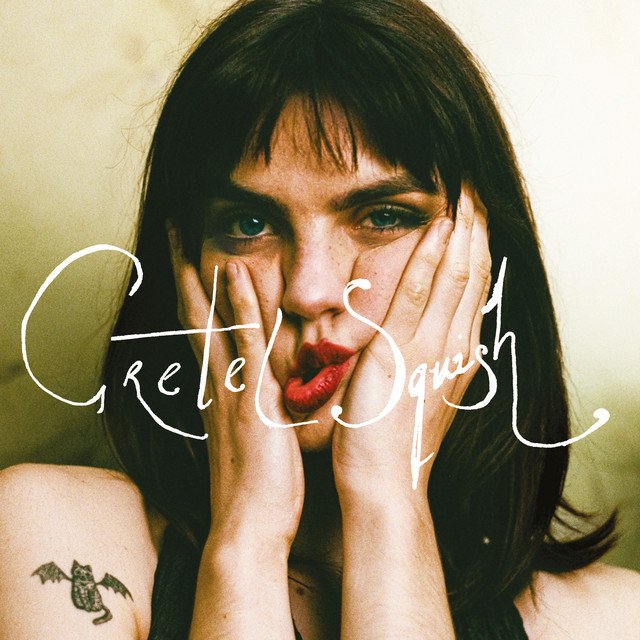
artwork by Karolina Wielocha, edited by Jaden Richer and Maddy Haenlein , graphic design by Matt de Jong
